
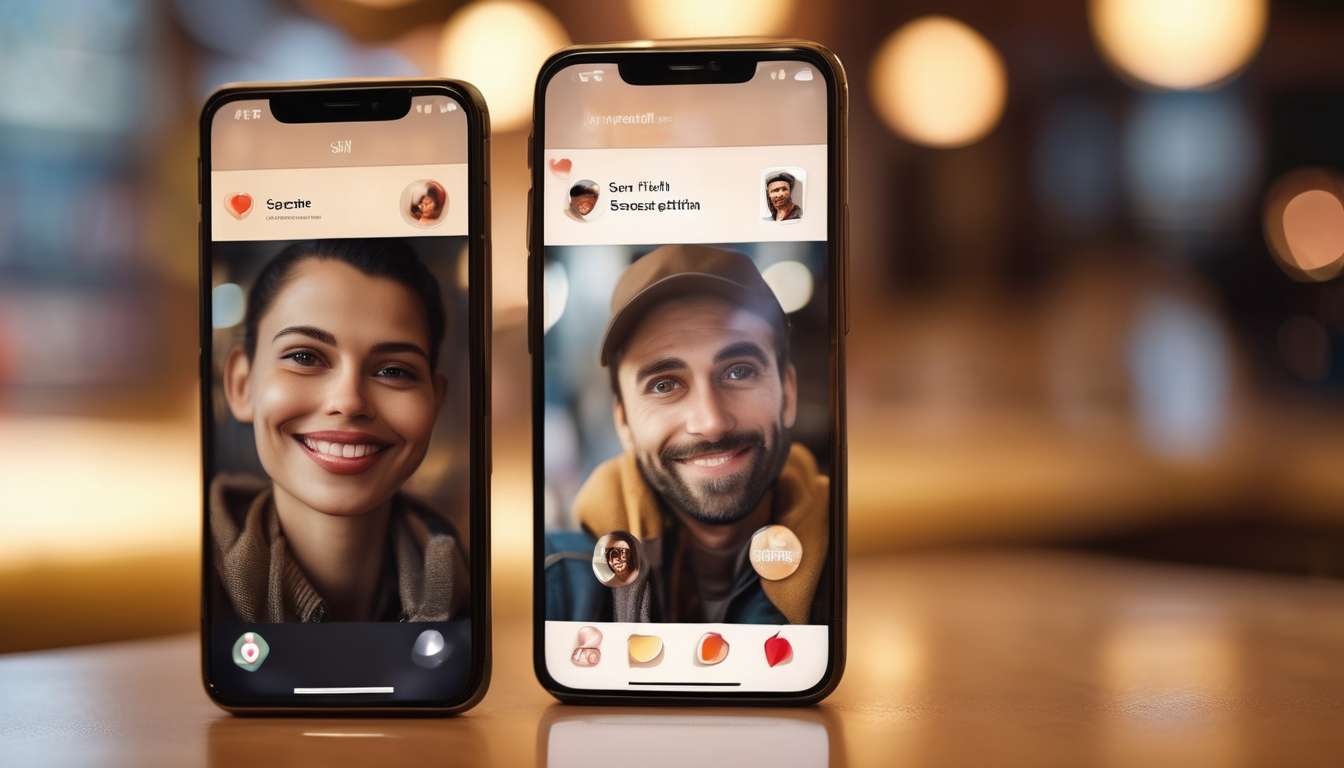
Growing uncomfortable with the blur between real and performative profiles, we ask: how much would our trust increase if every dating account carried a verified badge?
Platforms today allow charming bios and polished photos to mask misrepresentation. That uncertainty reshapes willingness to meet, message, or invest emotionally: people delay or avoid contact, ask more screening questions, or rely on external corroboration (social media, mutual friends).
Frame verification as more than a technical feature — as an assurance mechanism that reduces ambiguity. Verification signals that a face and a name correspond to a real person, which provides immediate psychological relief and lowers the perceived risk of engagement.
Behavioral shifts that follow verification include:
- Increased willingness to initiate contact and accept meeting requests.
- Faster escalation from messaging to in-person meetings.
- Greater openness and authenticity in profiles and conversation.
Ripple effects on safety, communication, and retention:
- Verified badges deter bad actors by raising the cost of deception.
- Verified environments encourage clearer, more respectful communication because users expect accountability.
- Platforms that emphasize verification can see higher retention as users feel safer taking interpersonal risks.
Empirical evidence and user experiences show verification changes perceptions, encourages authentic interaction, and reduces social friction. Studies and anecdotal reports indicate measurable decreases in catfishing incidents and increases in user-reported trust.
Conclusion — when implemented thoughtfully, profile verification transforms dating platforms from speculative marketplaces of identity into environments where people feel safer taking interpersonal risks. Thoughtful implementation means transparent processes, privacy protections, and strong fraud-detection follow-through to preserve trust rather than give a false sense of security.
Why Verification Matters
Verification matters because it builds trust in who we’re talking to.
When we join a dating platform, we want to feel seen and secure; profile verification provides a shared baseline so we can relate without constant doubt. We’re not asking for perfection — we’re asking for signals that build user trust while respecting safety and privacy.
Verified badges and clear verification policies reduce anxiety and enable connection.
They let us focus on connection instead of second-guessing identity, which helps prevent:
- catfishing,
- impersonation,
- hidden intentions.
Verification makes expectations explicit and enforceable, helping create inclusive spaces.
We value spaces where everyone can belong. Verification supports that by reassuring newcomers and supporting ongoing members, which invites more genuine interactions.
Balance transparency with discretion.
Platforms should:
- be transparent about what verification means,
- avoid making verification invasive,
- strike a balance so users feel safe without sacrificing privacy.
Outcome: stronger community bonds and more honest pursuit of companionship.
Ultimately, profile verification strengthens community trust, reassures members, and makes our shared pursuit of companionship more honest and humane.
How Verification Works
Overview: verification steps, acceptable evidence, and display of status
Steps platforms use to confirm identities
- Ask members to submit a live selfie or short video that matches their profile photos.
- Use automated facial‑matching tools and human reviewers to compare facial features and confirm identity.
- When needed, request supplementary evidence (see below) to complete verification.
What evidence is accepted
- Government IDs (passport, driver’s license, national ID).
- Social media links that corroborate identity and online presence.
- Utility or work documents (bills, employment verification) as additional proof.
How verification status is displayed
- Add visible badges or checkmarks on profiles after successful verification.
- Include timestamps or levels (for example, basic vs. enhanced) to indicate the strength or recency of verification.
- Make badges prominent so other users can quickly assess credibility.
Balancing verification with user trust and privacy
- Keep verification optional but visible—badges help others feel safer joining conversations and forming connections.
- Limit access to verified users’ sensitive data; only authorized personnel and processes can view it.
- Encrypt stored documents and delete submitted files after checks when possible to minimize risk.
Transparent communication and appeals
- Clearly explain what is collected, how long it’s kept, and how it’s used before asking for documents.
- Provide an easy appeal process and communicate decisions promptly so users feel included, respected, and confident using the platform.
Psychological Impact
Verification badges and transparent procedures can noticeably change how people feel and behave on dating platforms.
Profile verification often becomes a signal of credibility.
- It helps users feel safer when reaching out or accepting matches.
- Visible verification increases confidence for some people.
Clear explanations and data protections increase user trust.
- When platforms explain verification steps and protect data, users are more willing to share parts of themselves.
- Sharing parts of oneself fosters belonging.
Safety and privacy concerns remain central for many users.
- Some members worry about how verification data is stored or who can see it.
- These concerns can create hesitation or skepticism instead of comfort.
Platforms should balance visible verification markers with strong privacy controls and clear explanations.
- Provide straightforward, transparent descriptions of verification steps.
- Implement robust data protection and access controls.
- Offer easy-to-use privacy settings so users can choose how much to display.
The result of this balance is preserving connection without forcing exposure, reinforcing trust, and reducing anxiety.
Thoughtful communication about verification processes helps users feel seen, secure, and part of a considerate community.
Behavior Changes
Verified badges and visible verification steps change how people interact on dating platforms.
We observe that users are more likely to message, meet, and disclose personal details when profiles show verification. When people see confirmed identities, they are quicker to send the first message and more likely to suggest real-life meetings. This increased willingness is driven by heightened trust, which reduces social friction and fosters a sense of belonging.
Verification also shifts communication tone.
Conversations become more candid and respectful because users expect authenticity. That expectation curbs performative self-presentation and encourages more accurate bios and photos.
Safety and privacy-focused verification retains participation from cautious users.
- Platforms that emphasize safety and privacy in their verification process help users feel reassured before sharing contact details or personal stories.
- By balancing transparency with privacy controls, platforms can grow communities without sacrificing user comfort.
Overall effect:
Verification reinforces reciprocal norms and supports stronger connection-building among members.
Safety Benefits
We see fewer fake accounts and catfishing attempts when platforms require verification, which directly reduces deceptive behavior and harassment.
We feel safer connecting with others because profile verification makes it harder for bad actors to hide, and that shared safeguard fosters a sense of belonging.
When people know profiles are checked, user trust rises and conversations start from a place of mutual respect rather than suspicion.
We also protect safety and privacy together: verification can confirm identity without exposing private details, letting us engage confidently while platforms limit data visible to others.
Reporting and moderation work better when verified accounts are involved, so incidents are easier to investigate and resolve.
That clarity encourages us to report concerns and support one another, reinforcing community norms.
Overall, pragmatic verification practices strengthen user trust, reduce harmful interactions, and create environments where we can form genuine connections without sacrificing safety and privacy.
Implementation Challenges
Implementing verification at scale brings technical, legal, and user-experience hurdles we’ll need to address.
Technical challenges:
- We must balance robust profile verification with seamless onboarding so people feel included, not excluded.
- We’ll manage image-matching, liveness checks, and fraud detection while keeping systems fast and accessible across devices and connectivity levels.
Legal and compliance issues:
- We’ll navigate varying regulations that affect who we can verify, how long we retain records, and what disclosures we must provide.
- We must maintain inclusive language and ensure equal treatment across jurisdictions.
Operational considerations:
- We’ll train support teams to handle verification disputes compassionately so members don’t feel alienated when issues arise.
- We’ll document escalation paths and feedback loops between support, product, and legal teams.
Measuring impact and iterating:
- Measure impacts on user trust and engagement.
- Watch for unintended exclusion of marginalized users.
- Iterate policies and flows to encourage belonging and fairness.
Cross-functional alignment:
- Coordinate security, product, and legal teams to align goals: strengthen safety and privacy, reduce abuse, and build a verification flow that people from diverse backgrounds find fair, clear, and welcoming.
Privacy Considerations
Limit data collection, retention, and access to protect privacy and comply with laws.
Collect only the minimum identifiers needed. Design verification to make people feel seen but not exposed by:
- Minimizing personal identifiers collected.
- Using clear consent flows before collecting or using verification data.
- Providing options to hide verification details from public profiles.
Separate attestations from sensitive documents. Where possible:
- Store hashes, tokens, or attestations instead of raw IDs or sensitive documents.
- Explain plainly how verification increases trust while avoiding retention of source documents.
Restrict and audit access to verification records.
- Limit access to a small, explicitly authorized team.
- Use role-based access controls to enforce least privilege.
- Maintain audit logs of who accessed or changed verification records and review them regularly.
Give members control over their verification data.
- Provide simple, user-friendly options to delete verification data.
- Allow members to export their verification records in a standard format.
- Surface consent history so members know what they agreed to and when.
Secure data in transit and at rest.
- Encrypt verification records both in transit (TLS) and at rest (strong encryption keys and key management).
- Apply additional protections (e.g., tokenization, limited-use credentials) where appropriate.
Review retention policies regularly.
- Reassess retention against changing regulations and community expectations.
- Implement automated retention schedules and safe deletion procedures.
Outcome — center safety and privacy. By combining minimal data collection, clear consent, technical separation of attestations, strict access controls, member control, encryption, and ongoing policy review, you enable verification that strengthens trust while preserving belonging and individual control over personal information.
Measuring Success
We will define clear, measurable metrics and baselines to track how verification affects behavior, perception, and outcomes on the platform.
Key behavioral and outcome metrics:
- Adoption rate of profile verification.
- Conversion of verified profiles to matches.
- Changes in message response rates.
- Retention.
- Time-to-first-date.
- Complaints per thousand users.
Key perception and trust metrics:
- Periodic user surveys to measure perceived trust and safety.
- Net Promoter Score (NPS) segments for verified versus unverified members.
- Qualitative feedback from focus groups and in-app prompts.
Safety and privacy monitoring:
- Report frequency (number of safety/privacy reports).
- Resolution time for reported incidents.
- Recurrence rate of incidents to detect repeat problems.
Baselines and experiment design:
- Set baselines from pre-launch and historical data.
- Run A/B tests to isolate verification effects from other variables.
- Segment analyses by user cohorts (e.g., verified vs unverified, new vs existing users).
Reporting and feedback loops:
- Report metrics transparently to foster belonging and accountability.
- Share how user trust grows when verification is handled respectfully.
- Include qualitative feedback loops (focus groups, in-app prompts) to capture nuanced perceptions about safety and privacy.
- Iterate on the verification experience using both quantitative and qualitative signals to strengthen community confidence.
How much does profile verification typically cost for users and platforms?
Summary of typical profile verification costs
For users: Basic verification often costs $0 (free) to $1–$10 for simple automated checks. Premium or identity-strong verifications typically cost $10–$50.
For platforms: Automated verification services generally cost about $0.50–$5 per check. When human review or manual adjudication is required, costs rise to roughly $5–$50 per check.
Additional platform costs: Platforms should also budget for setup and ongoing expenses, including infrastructure, fraud detection systems, compliance, and integrations.
Budgeting guidance: Estimate total costs based on scale (number of verifications), trust level required (basic vs. strong identity assurance), and the chosen mix of automation vs. human review.
Can verification be revoked or expire, and what is the process for re-verification?
Yes — verifications can lapse or be revoked.
Verifications may be removed or allowed to expire for reasons such as inactivity, policy breaches, or when a user’s supporting documents change or become invalid.
We notify users and explain the reason.
When a verification is revoked or about to expire, we will inform the user, give a clear explanation of the issue, and suspend badges or verification indicators until the problem is resolved.
Re‑verification process and what we request.
- We’ll ask for updated documents, such as a current government ID.
- We may require a fresh, live selfie (liveness check) to confirm identity.
- Additional checks might be requested where necessary (e.g., supplemental documentation or manual review).
Guidance and outcome.
We provide step‑by‑step guidance to complete re‑verification, and once the required checks pass, we restore the user’s verification so they can feel welcome and secure.
Will verified profiles appear differently in search results or get algorithmic boosts?
Short answer: Verified profiles may appear differently and can receive modest algorithmic preference, but they are not guaranteed permanent top placement.
How verification affects visibility
- We surface verified members more prominently and may weight them slightly higher in recommendations to reflect increased trust and credibility.
- Relevance, user preferences, and safety signals remain primary—these factors still determine search ranking and recommendations.
Transparency and fairness
- We won’t guarantee constant top placement for verified profiles.
- If verification affects ranking, we will be transparent about its role in the algorithm.
Ways to improve discoverability
- Maintain high profile quality (complete, accurate, and engaging information).
- Stay active (regular, appropriate activity signals better engagement).
- Follow community and safety guidelines to avoid negative ranking signals.
Conclusion
You’ll feel more confident when dating platforms verify profiles, because verification reduces uncertainty and highlights genuine intent.
By making verification simple and transparent, platforms encourage honest behavior, cut down on scams, and foster safer interactions.
You’ll also benefit from clearer safety cues and measurable trust gains, though you’ll want safeguards for privacy and fair access.
Overall, verification strengthens the dating ecosystem—if it’s implemented thoughtfully, you’ll enjoy more authentic, secure connections.